
The Details Nobody Names Are the Ones Everybody Notices

The custom walnut millwork and acoustical ceiling systems at The Cove restaurant renovation in Fall River, MA.
Nobody walks into a finished space and says "I love how tight those joints are." But they notice when they're not.
Finish quality in commercial construction is one of those things that's invisible when it's done right and impossible to miss when it isn't. A gap where two materials meet. A reveal that's off by an eighth of an inch. A transition between flooring materials that doesn't quite land. Individually they seem small. Together they change how a space feels — and how a brand is perceived by everyone who walks through the door.
This is where a lot of commercial renovation projects quietly fall short. Not in the big decisions — the layout, the materials, the budget — but in the execution of the details that nobody put on a checklist.
What Clean Finishes Actually Mean in Commercial Construction
The term "finish quality" gets used a lot in construction. This is referring to details such as where tile meets baseboard, where drywall meets trim, or where a countertop meets a wall. A tight joint is one with no visible gap, no uneven edge, no caulk doing the work that precision should have handled. Inconsistent reveals are one of the first things an experienced eye catches in a finished space, even if they can't name exactly what's off. The space just feels slightly wrong, and that feeling erodes confidence in the overall quality of the build. While a seamless transition guides the eye through a space without interruption. And a poor one stops it. In high-end commercial spaces like luxury retail environments and country club renovations, this level of detail isn't optional. It's the baseline.
Why This Is Harder Than It Sounds
Finish quality isn't just about the last trade on site. It's the result of every decision that came before.
A subcontractor who rushes their rough-in work leaves the finish trade with an uneven substrate. A framing crew that isn't held to tight tolerances creates walls that no amount of trim can fully correct. A tile setter working on a floor that wasn't properly prepared will produce joints that look acceptable on day one and problematic within a year.
This is why finish quality is really a coordination and standards problem, not just a craftsmanship problem. The finished surface is the sum of everything underneath it.
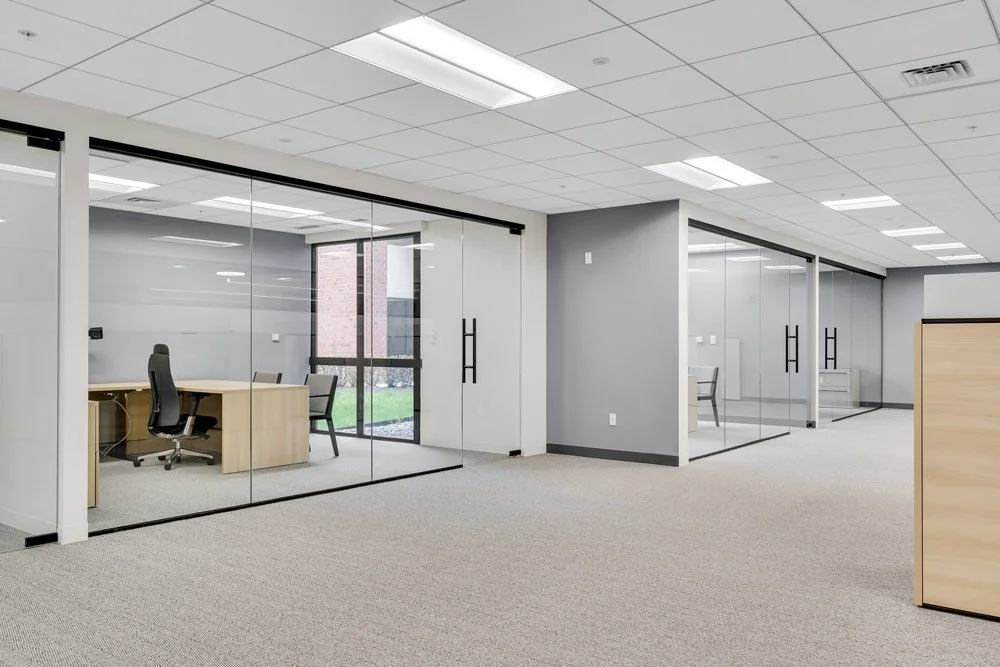
At Walker, we've seen this play out across projects of every type—from the custom walnut millwork and acoustical ceiling systems at The Cove restaurant renovation, to the glass office fronts and reconfigured sales floor at Intact Insurance's 20,000 SF workplace transformation, to the branded millwork and custom finishes at the Wildgrain flagship bakery in Somerville. In every case, the finish quality that the client and their customers experience is the result of standards that were set and enforced long before the final trades arrived on site.

Where Most Projects Fall Short
The gap between a good commercial renovation and a great one almost never lives in the big decisions. Clients agonize over material selections, layouts, and budgets, and rightfully so. But the execution of those decisions is where projects quietly succeed or fail.
A custom millwork piece installed against a wall that wasn't plumb. A tile floor laid without enough attention to grout line consistency. A painted surface that reveals every imperfection in the drywall beneath it because the prep work wasn't done right. These aren't catastrophic failures. They're the kind of details that accumulate into a finished space that feels slightly less than what was promised and slightly less than what the client deserved.
The projects that avoid this outcome are the ones where finish quality is treated as a standard from day one, not a conversation saved for punch list.
How Walker Holds the Line
At Walker, finish quality is a conversation that starts in preconstruction and doesn't end until the last trade leaves the site. It shapes how we vet and manage subcontractors, how we conduct site walks, and how we define project completion.
Our site superintendents are trained to catch finish issues before they become finish problems, to identify a substrate that isn't ready, a joint that won't close cleanly, or a transition that needs to be addressed before the next trade arrives and makes it harder to fix. That level of attention doesn't happen by accident. It's a cultural standard that runs through every project we take on, regardless of scope or budget.
The clients who trust Walker with their spaces have worked too hard on their vision to have it undermined by details that should have been caught. Whether it's a first-time retail build-out or a complex occupied renovation, the goal is always the same: a space that looks exactly how the client imagined it and feels even better in person.
The Standard That Sets Great Projects Apart
Finish quality won't show up on a project timeline. It doesn't have its own line item in a budget. But it's one of the clearest indicators of whether a contractor truly cares about the work they're delivering or simply cares about getting it done.
The spaces that stand out over time, the ones that clients are proud to show off and that reflect well on everyone involved, are the ones where someone held the line on the details that nobody names but everybody notices.
That's the standard worth building to.
Walker Development & Construction Management specializes in high-quality commercial construction, tenant fit-outs, and complex renovations across Massachusetts and New England.